If you’re searching “is buying property in Dubai worth it,” you’ve probably already come across wildly different opinions: people claiming they doubled their capital in three years, and warnings about scams and vanished developers. After 26 years in real estate between Milan and Dubai, the honest answer is: it’s worth it, but only if you buy the right things, the right way. Here’s a straightforward guide, no sales spin, to help you figure out if now is the right time for you.
Why more international buyers are choosing Dubai
Three reasons come up in almost every conversation with my clients:
- Zero tax on rental income and capital gains in Dubai itself (you may still owe tax in your home country depending on your tax residency — more on that below).
- Gross rental yields between 6% and 9%, well above the average in most major European cities.
- Flexible payment plans (often 60/40 or 70/30, with installments through handover) that make entry accessible even without a mortgage.
There’s also a less-discussed but very real factor: Dubai is today one of the most transparent property markets in the Gulf, with a public transaction registry (DLD, Dubai Land Department) that lets you verify real prices, a project’s track record, and a developer’s reliability before you sign anything.
How much does property in Dubai actually cost in 2026
Prices vary enormously by area. To give you a realistic picture:
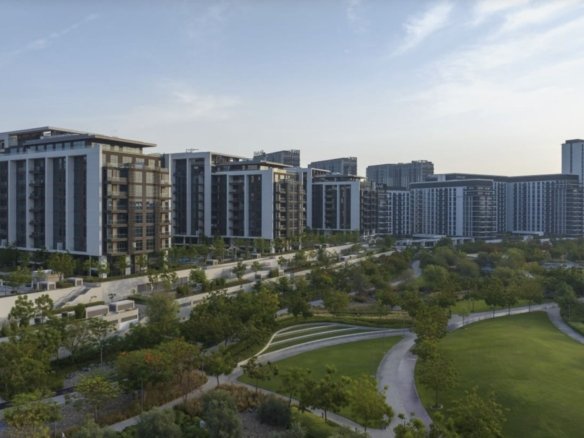
- Emerging / residential areas (JVC, Dubailand, Dubai South): studios starting around €150,000.
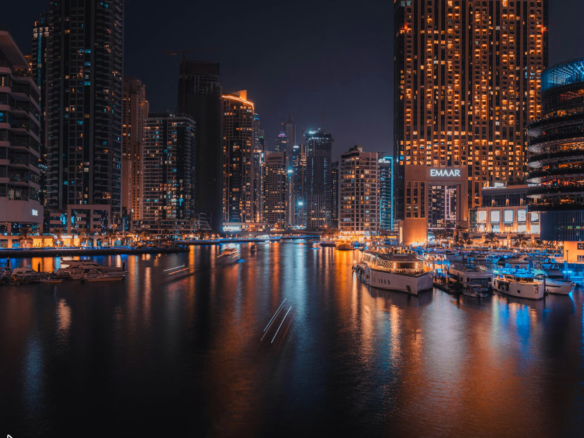
- Established mid-tier areas (Business Bay, Dubai Marina, JLT): roughly €300,000–€600,000 for a one- or two-bedroom.
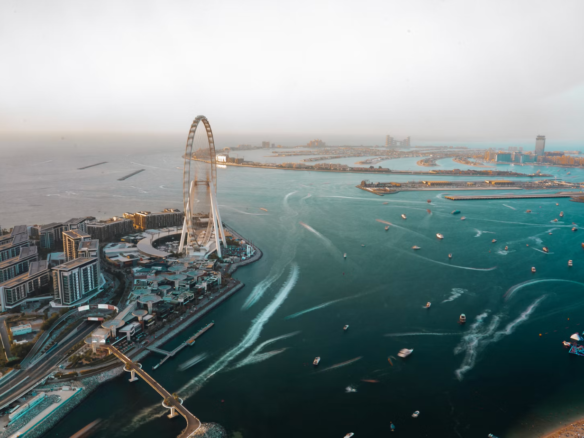
- Ultra-luxury (Palm Jumeirah, Emirates Hills, Downtown): from €1 million upward, with no real ceiling.
On top of that, factor in often-overlooked costs: a 4% DLD registration fee, agency commission (typically 2%), and transfer costs. On a €400,000 purchase, realistically budget another €25,000–€30,000.
The real risks (and how to actually avoid them)
This is where most online guides stop at vague generalities. In my direct experience, there are three concrete issues:
1. Unreliable developers and off-plan projects that slip
Not all developers are equal. The major names (Emaar, Nakheel, Meraas, Dubai Properties) have a verifiable track record of on-time delivery; many smaller developers don’t. Before signing, I always check a developer’s DLD track record and the project’s escrow setup: in theory, buyer funds are held in an escrow account and released only against construction progress, but how well this is enforced varies.
2. Unregistered agents and self-styled “brokers”
In Dubai, anyone can call themselves a “property consultant” on Instagram. A legitimate agent holds a publicly verifiable RERA (Real Estate Regulatory Agency) license and a BRN number, and is registered under a licensed agency. Always ask for the license number before transferring any money.
3. Underestimating running costs and resale
Annual service charges, rental management, potential vacancy periods: factor these in before you buy, not after. And if resale is already on your mind, think about a project’s market liquidity, not just the lowest entry price.
Can foreigners get a mortgage in Dubai?
Yes, Dubai banks do lend to non-residents, generally up to 50-60% of the property value (versus 75-80% for UAE residents). Rates and requirements vary, and many of my clients prefer developer payment plans instead — often simpler to secure and without the international banking paperwork.
What about taxes back home?
A point many online guides skip: depending on your country of tax residency, rental income and any capital gain on resale may still need to be declared at home, even though Dubai itself taxes neither. Don’t treat this as an afterthought — talk to your accountant before you buy, not after.
So, is it worth buying property in Dubai?
It’s worth it if: you buy from a solid developer, work with a RERA-licensed agent who represents you (not just the seller), understand your home-country tax situation upfront, and aren’t chasing the lowest price alone. It’s not worth it if you’re looking for a fast shortcut without due diligence, or you rely on the first contact you found in a Facebook group.
I’m Mathia Delmonte, an Italian real estate agent in Dubai since 2000: I treat every client’s purchase as if I were buying it myself. If you’d like an honest opinion on your specific situation, book a free, no-obligation call — I’ll tell you clearly if, where, and how it makes sense for you to buy.